Social Skills Training: Empowering Children with Special Needs
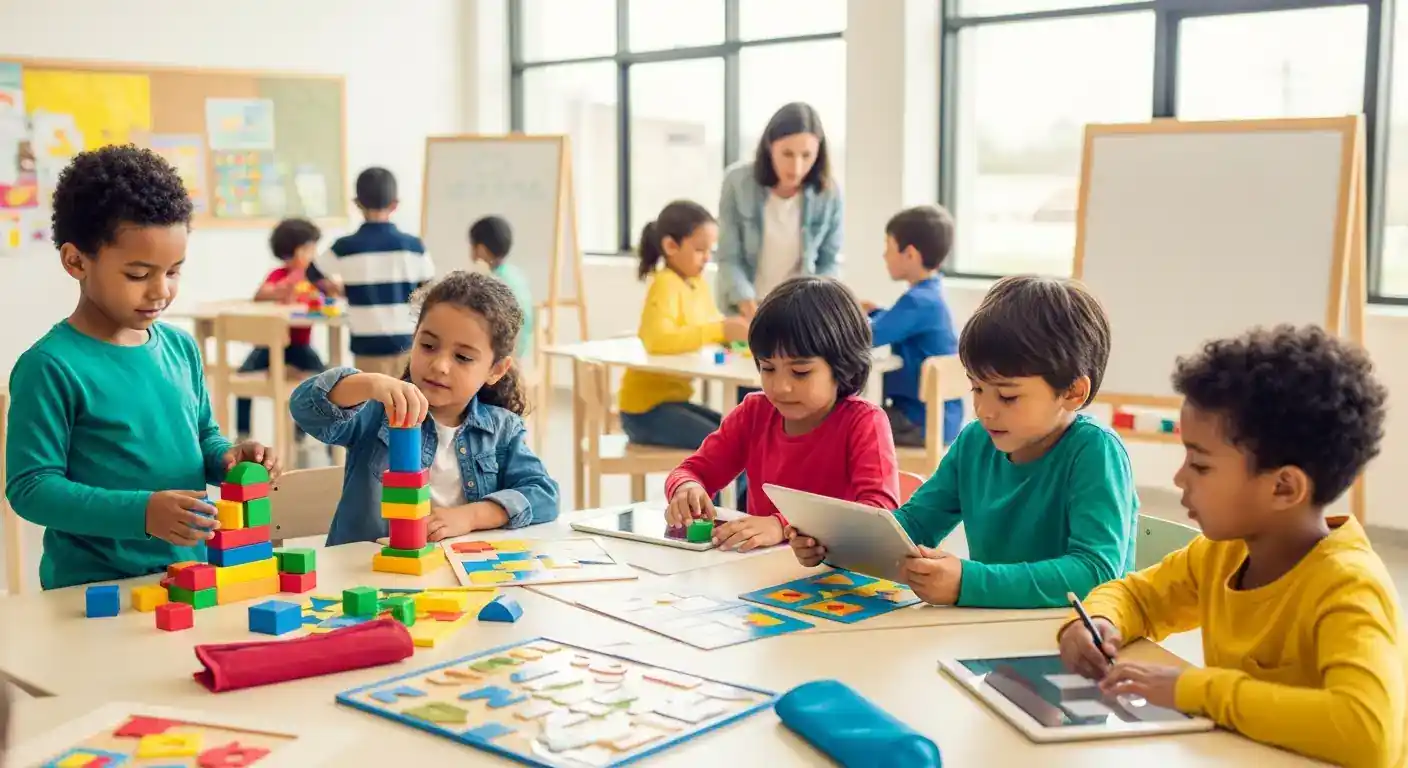
Navigating social interactions can be a significant challenge for children with special needs. Social skills training offers a structured and supportive pathway to help these children develop crucial interpersonal abilities, build confidence, and foster meaningful connections. This comprehensive guide explores the importance of social skills training, its various approaches, and how it can profoundly impact a child's life. By equipping children with the tools to understand social cues, communicate effectively, and build relationships, we empower them to thrive in diverse environments.
Key Points:
- Enhanced Communication: Learning to express needs and understand others.
- Improved Relationships: Building friendships and positive social bonds.
- Increased Confidence: Developing self-esteem through successful interactions.
- Behavioral Regulation: Managing emotions and responding appropriately.
- Independence: Gaining skills for navigating social situations autonomously.
Understanding the Importance of Social Skills Training for Special Needs Children
Social interaction is fundamental to human development. For children with special needs, such as those on the autism spectrum, with ADHD, or with developmental delays, the complexities of social communication and engagement can present unique hurdles. Social skills training is designed to bridge these gaps, providing explicit instruction and practice in areas that may not be intuitively understood. These skills are not merely about "fitting in"; they are about empowering children to understand the world around them, express themselves effectively, and build a sense of belonging.
The benefits of robust social skills extend far beyond the playground. They are crucial for academic success, as classroom environments require collaboration and communication. Furthermore, strong social competencies are foundational for future employment opportunities and overall quality of life. When children with special needs receive targeted support in developing these abilities, they are better equipped to form lasting friendships, manage conflicts, and navigate the nuances of social dynamics, leading to greater independence and well-being.
Core Components of Effective Social Skills Training Programs
Effective social skills training is multifaceted, addressing various aspects of social interaction. It's not a one-size-fits-all approach and often requires tailoring to the individual child's needs, strengths, and challenges. At its heart, good training focuses on teaching, modeling, practicing, and generalizing these learned skills.
Direct Instruction and Modeling
This foundational element involves explicitly teaching social concepts that neurotypical children might pick up implicitly. This can include:
- Understanding Non-Verbal Cues: Teaching children to recognize facial expressions, body language, and tone of voice. For example, teaching that a frown often signifies sadness or displeasure.
- Conversation Skills: Learning how to initiate a conversation, maintain it, take turns speaking, and ask relevant questions. This might involve practicing greeting phrases or learning how to ask about someone's day.
- Emotional Recognition and Expression: Helping children identify their own emotions and those of others, and learning appropriate ways to express them. This is crucial for emotional regulation strategies in children with special needs.
- Perspective-Taking: Developing the ability to understand that others have different thoughts, feelings, and beliefs. This is a complex skill that requires practice and guided explanation.
Role-Playing and Social Scenarios
Once a skill is explained, children need opportunities to practice it in a safe and controlled environment. Role-playing allows them to experiment with different social responses and receive immediate feedback.
- Simulating Real-Life Situations: Scenarios can range from simple greetings to more complex situations like joining a game, handling a disagreement, or asking for help.
- Practicing Problem-Solving: Role-playing can also be used to work through common social challenges children encounter, such as what to do when excluded from a group.
- Receiving Constructive Feedback: Therapists or educators can pause scenarios to offer guidance on what worked well and what could be improved.
Generalization and Real-World Application
A significant challenge in social skills training is ensuring that learned skills transfer from the therapy setting to real-life situations. This requires conscious effort and ongoing support.
- Community Outings: Practicing skills in actual community settings, like a park or a store, with support.
- Involving Parents and Educators: Training parents and teachers to reinforce social skills at home and school, creating a consistent environment.
- Peer Support Groups: Facilitating interactions with peers who can model and reinforce appropriate social behaviors.
Differentiated Approaches for Diverse Needs
The landscape of special needs is broad, and so are the effective methods for social skills training. Recognizing and adapting to these differences is key to successful outcomes.
Applied Behavior Analysis (ABA) Techniques
For some children, particularly those with autism spectrum disorder, ABA-based interventions have shown significant success. These methods often involve:
- Discrete Trial Training (DTT): Breaking down social skills into small, manageable steps and teaching them through repetition and reinforcement.
- Naturalistic Teaching: Integrating social skill instruction into naturally occurring routines and play activities to promote generalization. This approach is often highlighted in recent research on evidence-based interventions for autism.
Cognitive Behavioral Therapy (CBT) for Social Anxiety
For older children or those experiencing significant social anxiety, CBT can be highly beneficial. It focuses on identifying and challenging negative thought patterns that interfere with social interactions and teaching coping mechanisms. This has been supported by studies in child psychology publications from 2024.
Social Stories™ and Visual Supports
Social Stories™ are short, narrative-style descriptions of social situations, skills, or concepts, designed to help children understand what to expect and how to respond. Visual aids, like cue cards or social charts, can also provide concrete reminders and support for social rules.
Play-Based Therapy
For younger children, play is a natural medium for learning. Play-based therapy utilizes games and imaginative scenarios to teach social skills in a fun and engaging way. This approach fosters spontaneous interaction and allows children to practice skills in a low-pressure environment.
Case Study: The Impact of Social Skills Training
Consider the case of Leo, an eight-year-old diagnosed with ADHD and mild autism. Leo struggled with initiating play with his peers, often standing on the sidelines, unsure how to join in. He also had difficulty understanding the unwritten rules of games, leading to frustration for both himself and other children.
Leo's parents enrolled him in a specialized social skills training group facilitated by a developmental psychologist. The group focused on skills like greeting peers, asking to join activities, sharing, and taking turns. Through structured role-playing exercises and the use of visual aids depicting "joining in" steps, Leo began to grasp the concepts. His therapist, Dr. Anya Sharma, noted Leo's progress. "Initially, Leo was hesitant to participate in the role-plays, but with consistent encouragement and positive reinforcement, he started to engage," Dr. Sharma explained. "We used a 'praise-prompt-practice' model, reinforcing his attempts and gently guiding him when needed."
A significant breakthrough occurred when Leo was able to successfully ask another child, Maya, if he could join her game of tag during a supervised playground session. This was a direct application of the skills he had practiced in therapy. Maya, also taught basic peer interaction strategies, responded positively, inviting Leo to play. This single successful interaction boosted Leo's confidence significantly. Over several months, with continued therapy and consistent reinforcement from his parents at home, Leo's ability to initiate and maintain play with his peers improved dramatically. He began to form tentative friendships, a goal that once seemed distant.
Expert Insights and Latest Trends
The field of social skills training is continuously evolving. Recent trends emphasize a more integrated approach, recognizing that social development is deeply intertwined with emotional regulation and communication.
- Trauma-Informed Social Skills: Understanding how past adverse experiences can impact social engagement and adapting training to be sensitive to these factors. This perspective is gaining traction in child development research published in 2025.
- Technology-Assisted Learning: Utilizing apps, virtual reality, and video modeling to provide engaging and accessible social skills instruction. For instance, VR can simulate complex social scenarios in a safe, controlled environment.
- Focus on Neurodiversity Affirming Practices: Shifting from a deficit-based model to one that celebrates neurodiversity and helps children develop skills that align with their unique strengths and preferences, rather than forcing them to conform to neurotypical norms. This is a key area of discussion in contemporary special education journals.
Frequently Asked Questions (FAQ)
Q1: How do I know if my child needs social skills training? If your child consistently struggles with making friends, understanding social cues, sharing, taking turns, or managing emotions in social situations, they may benefit from targeted social skills development. Observe their interactions and consider professional assessment.
Q2: What is the difference between social skills training and play therapy? While both can be beneficial, social skills training is often more directive, focusing on teaching specific strategies. Play therapy uses play as the primary medium to address a broader range of emotional and behavioral issues, including social challenges, in a less structured way.
Q3: How long does social skills training typically take? The duration varies greatly depending on the child's age, specific needs, and the intensity of the program. Progress is often gradual, and consistent practice is key. Many children show noticeable improvements within a few months to a year of dedicated training.
Q4: Can parents be involved in social skills training? Absolutely. Parental involvement is crucial for success. Therapists often train parents on how to reinforce learned skills at home and in everyday situations, creating a consistent support system for the child.
Conclusion and Next Steps
Social skills training is a powerful tool for empowering children with special needs to lead more connected, confident, and fulfilling lives. By providing structured learning, practice, and consistent support, we help them unlock their potential for meaningful relationships and greater independence.
Take the next step:
- Consult with Professionals: Speak with your child's pediatrician, an educational psychologist, or a behavioral therapist to assess your child's needs and discuss appropriate interventions.
- Explore Local Resources: Research social skills groups, therapy centers, and community programs in your area.
- Engage at Home: Actively look for opportunities to practice social skills in everyday situations and provide positive reinforcement.
We encourage you to share your experiences and insights in the comments below. Your perspective can help other families navigate their journey. For more detailed information on supporting children with developmental differences, consider exploring related articles on communication strategies and emotional regulation.